Rembrandt van Rijn (Dutch 15 July 1606 – 4 October 1669) was a Dutch painter and etcher. He is generally considered one of the greatest painters and printmakers in European art and the most important in Dutch history. His contributions to art came in a period of great wealth and cultural achievement that historians call the Dutch Golden Age when Dutch Golden Age painting, although in many ways antithetical to the Baroque style that dominated Europe, was extremely prolific and innovative. Having achieved youthful success as a portrait painter, Rembrandt's later years were marked by personal tragedy and financial hardships. Yet his etchings and paintings were popular throughout his lifetime, his reputation as an artist remained high and for twenty years he taught many important Dutch painters. Rembrandt's greatest creative triumphs are exemplified especially in his portraits of his contemporaries, self-portraits and illustrations of scenes from the Bible. His self-portraits form a unique and intimate biography, in which the artist surveyed himself without vanity and with the utmost sincerity.
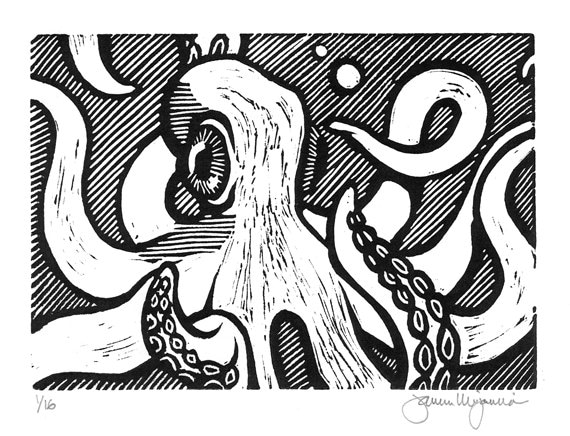
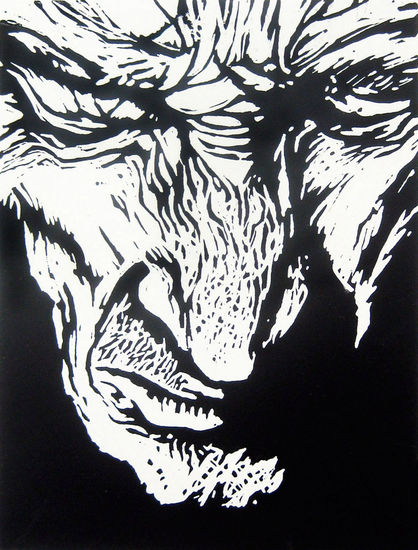
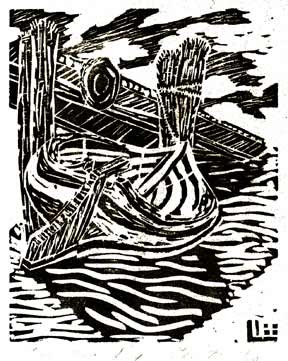
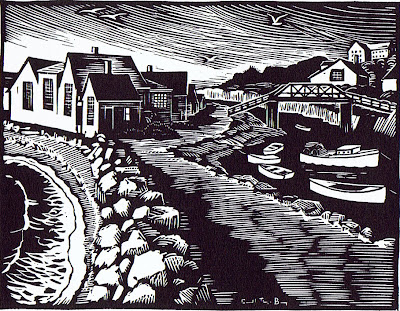
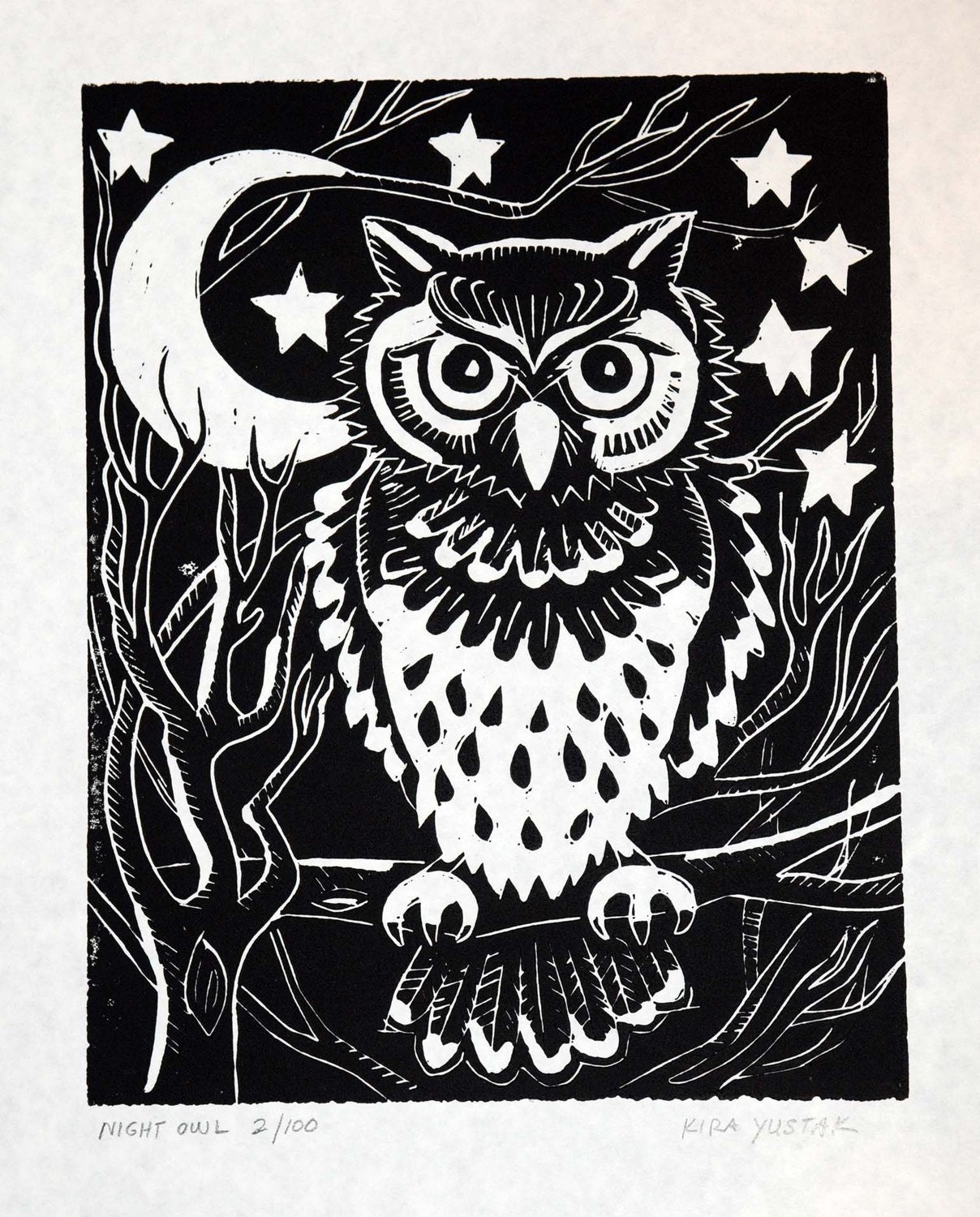
Below are examples of portraits using the block print method. The white areas are carved away and the black is left in the material. The block is then inked and printed. What do you think?
VALUE - the degree of lightness on a scale from black to white
We will be creating the ILLUSION of space using pencil. We will move on to graphite to learn how to shade and create the illusion of 3-dimensional forms.
Below are examples of radial symmetry in art by artist Victor Vasarely. Victor Vasarely, was a Hungarian–French artist, who is widely accepted as a "grandfather" and leader of the op art movement. His work entitled Zebra, created in the 1930s, is considered by some to be one of the earliest examples of op art. What do you think? Which one is your favorite? "Zebra" 1938